 By
Larry Mutenda
By
Larry Mutenda
Which medical animation companies should I consider? Start with Creamy Animation, Random42 and Nucleus Medical Media. Creamy suits patient and product explainers for health tech. Random42 is a good fit for processes inside the body. Nucleus Medical Media suits comparing custom production with existing assets.
Medical animation has to be accurate before it can be clear. When you compare medical animation companies, look at who checks the science and how they work with your reviewers. Ask how they handle references, since medical and legal teams will want to trace every claim.
The companies here include scientific specialists and studios that focus on patient education. The right fit depends on who will watch the video.
See how the ten companies compare in the table below.
| # | Company | Specialty | Best for | Notable clients |
|---|---|---|---|---|
| 1 | Creamy Animation | Story-driven animated videos | General animated communication | Blockdaemon; CoPilot AI |
| 2 | Random42 | Scientific animation and interactive media | Processes inside the body | Not published |
| 3 | Nucleus Medical Media | Custom and licensed medical animation | Comparing custom production with existing assets | C.R. Bard |
| 4 | Ghost Medical | Medical animation and surgical simulation | Device and procedure explanations | Not published |
| 5 | AXS Studio | Medical and scientific visual communication | Scientific stories with interactive extensions | Novartis; HHMI BioInteractive |
| 6 | MadMicrobe Studios | Medical animation and scientific storytelling | A cinematic treatment of scientific subjects | Not published |
| 7 | Hybrid Medical Animation | Medical and scientific 3D animation | Mechanism-of-action and device animation | Not published |
| 8 | XVIVO | Medical and scientific 3D animation | Mechanism-of-action films | Pfizer; Harvard University |
| 9 | Highbeam Studios | 3D medical animation | Medical device and mechanism visualization | Lungpacer Medical |
| 10 | Infuse Medical | Patient and clinician education content | Not published |
Our four criteria were scientific clarity, visual craft, relevant medical experience and any published results.
Creamy Animation published this page and placed itself first. Weigh that in your review.
“Best for” lines show our view of fit. Clients are drawn from each company’s own site. Where no price or result was published, we note it.
We make animated explainers for health tech and healthcare brands, along with SaaS companies and nonprofits. Our strength is patient and product communication. Specialist scientific visualization, such as detailed molecular work, is better handled by the medical studios further down this list. Ask us when your video needs to explain a service, a device’s purpose or a care pathway in plain words. We’ll ask who reviews medical accuracy on your side and build those rounds into the plan. That keeps the schedule honest from the start.
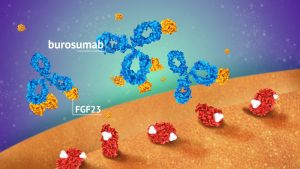
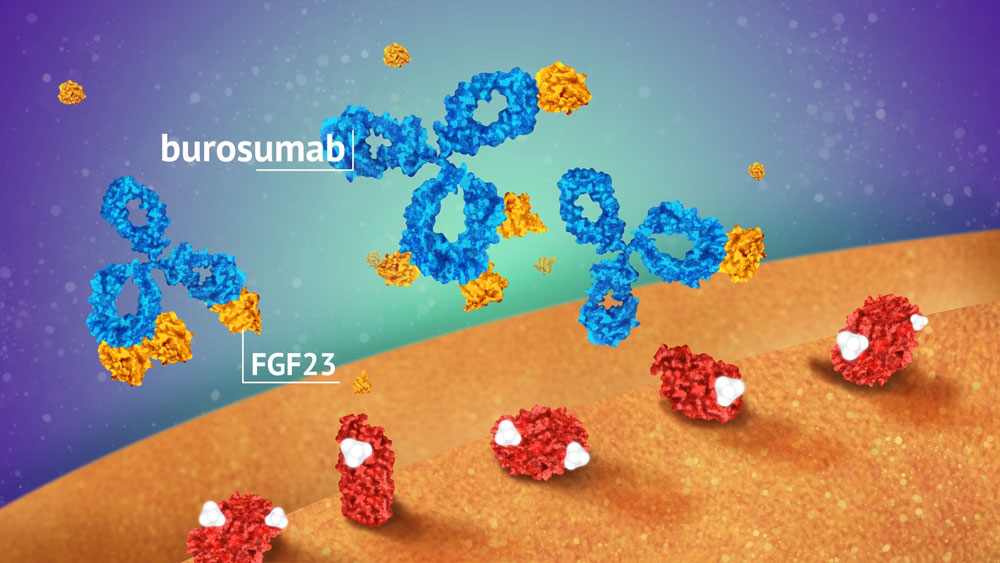
This was a pharmaceutical education project on XLH and TIO. The video had to show how burosumab works in patients. It's a mechanism of action animation. The process happens inside the body, where no camera can go. Patients and clinicians can see how the treatment works, step by step.
Results: No public data
Random42 builds much of its published work around biological processes. That makes it a natural fit when the subject happens inside the body and can’t be filmed. Ask how the team decides where to simplify. A cell or protein often needs a visual shortcut, and your reviewers should agree on it. Request a sample made for an audience like yours, whether that’s clinicians or patients. Confirm how references are tracked for each claim. That record helps when your medical and legal teams review the film.
Results: No public data
Nucleus Medical Media offers custom animation and a medical visual library. It is useful to compare those routes when the subject is already well defined. A licensed animation may cover a general explanation, while a custom project can address a specific product or message. Ask about permitted channels and modification rights. Review the audience level carefully so a technical sequence doesn’t leave a patient or general viewer behind. For this brief, pay particular attention to how scientific accuracy is reviewed and documented.
Results: No public data
Ghost Medical offers medical animation alongside surgical simulation work. I’d investigate it when the brief concerns a device or procedure. Check how the proposed video will show the operator’s action and the resulting change. A viewer should be able to distinguish the mechanism from supporting visual effects. Ask which materials the team needs from your experts and whether a motion review happens before the final visual finish. The useful question here is how scientific accuracy is reviewed and documented. Ask for a sample in your therapeutic area.
Results: No public data
AXS Studio’s services include scientific animation and interactive medical work. I’d consider it when a core explanation may also support a conference or interactive presentation. Decide what the video itself must explain before adding other formats. Then ask which models and illustrations can be shared across the deliverables. That makes it easier to keep the scientific story consistent while allowing each format to serve its own audience. When reviewing this option, focus on how scientific accuracy is reviewed and documented.
Results: No public data
MadMicrobe focuses on scientific animation for medical and related audiences. I’d review it when the brief calls for a strong visual treatment of a complex subject. Discuss how lighting and camera movement will guide attention to the mechanism being explained. The visual ambition should support the intended level of understanding. Ask for a representative scene that your science reviewers can assess before the rest of the film is finished. For a project like this, discuss how scientific accuracy is reviewed and documented early.
Results: No public data
Below is “Monoclonal antibodies animation | antibody animation | #multiplemyeloma #monoclonalantibodies” from HybridMedical. It runs 21 sec. That focus helps when accuracy matters as much as clarity. Ask how their team checks the science and who signs off on anatomical detail. Medical projects often need regulatory and legal review. Build those rounds into the schedule from the start. Ask whether they can supply stills and short clips from the same files for sales and congress use. Check how they handle updates when new clinical data changes the story.
Results: No public data
XVIVO focuses on medical and scientific animation, and that focus shows in how carefully it treats biology. It’s a strong pick for mechanism-of-action films and research communication. Ask how its team checks each scene against published sources. Find out which scientists or medical writers would join your project. Plan time for your own medical reviewers to approve the storyboard before animation starts. Scientific accuracy is much cheaper to fix at the drawing stage. Ask for stills from the final scenes too, since they’re useful in papers and slide decks.
Results: No public data
Highbeam Studios publishes medical animation work covering mechanisms, devices, and procedures. It is a candidate when one difficult explanation needs close visual attention. I’d begin with the exact action the viewer needs to understand. Ask how the studio will establish orientation before moving into detail. Review a rough motion sequence with your subject expert so errors in the explanation can be corrected before the final rendering stage. Use the discovery call to examine how scientific accuracy is reviewed and documented.
Results: No public data
That pairing suits teams that need a video and a follow-on resource for patients or sales reps. Ask how the animation and interactive pieces share assets. Reusing the same 3D models across formats can save money. Confirm the review process for clinical accuracy. Ask who on their side has a medical or science background and how they work with your own experts. Ask how long a typical project takes from script to final delivery.
Results: No public data
Medical animation visualizes anatomy, a device, or a scientific mechanism. Healthcare marketing video has a broader communication goal, such as explaining a service or introducing an organization. The categories can overlap, but scientific visualization needs subject-specific evidence and review. This list includes specialist medical studios and broader explainers. Match the level of scientific expertise to what the video actually needs to show.
Define the audience’s existing knowledge. A patient-facing explanation needs different language and detail from a scientific presentation. Identify the claims the video will make and the sources supporting them. Then name the person responsible for approving the script and visual interpretation. Scientific review should shape the production from the beginning.
Medical animation usually costs more than general explainers because of research and expert review. Our explainer video cost guide covers general pricing. Creamy’s tiers are:
Mechanism-of-action films for pharma often sit above this range. Ask each company to price research, medical review and regulatory rounds as separate lines. Ghost Medical lists an average medical-animation turnaround of about 10 weeks. Use that as one reference point only.
Medical animation is commonly used for work like this.
How to choose the right company
These steps will help you choose a medical animation partner.
Decide whether the film is for patients, clinicians, investors or regulators. Each group needs a different level of detail. A patient video needs plain words. A clinician video can use technical terms. Tell each company who will watch. Write the audience into the brief.
Ask who on the company’s staff has a science or medical background. Find out how they research a new topic. Accuracy problems can be costly in healthcare. A strong team will ask detailed questions before quoting. Ask to meet that person before you sign. Their questions will tell you a lot about the company’s rigor.
List every reviewer your organization needs. That often includes medical affairs, legal and regulatory. Share that chain with the company. Ask how many review rounds the quote covers and how extra rounds are charged. Plan the review dates in the calendar before production begins.
Medical 3D models are expensive to build. Ask whether you’ll own them and in what format. Reusing models for stills, sales tools and congress booths can stretch your budget a long way. Ask for a list of the assets you’ll receive. Include the model files and their formats.
Ask how the company handles claims, references and on-screen citations. Some markets require specific disclaimers. Make sure the final files include everything your compliance team needs. Ask for a final checklist before delivery. Your compliance team can sign it off in one pass.
Scientific medical animation usually costs more than a general explainer. Simpler patient explainers can sit lower. Creamy charges $2,500 to $4,000, $5,000 to $10,000 or $10,000 to $25,000, depending on tier. Research and review rounds add the most cost. Ask for research and review costs as separate lines.
Ghost Medical lists an average of about 10 weeks. Research and script approval can take a third of that. Legal and regulatory review often adds time. Book your reviewers early. Booking your medical and legal reviewers early helps avoid delays later.
Choose a company with science-trained staff and full films close to your topic. Ask how they research and verify content. Compare review rounds, asset ownership and compliance support before you decide. Ask who on their team would research your topic.
Packages usually include research, script, storyboard, 3D modelling, animation, voiceover and final files. Medical illustration, stills and extra language versions may cost more. Ask for a deliverables list and confirm reference handling. Check how references and citations are shown on screen.
Hire a specialist company for mechanism or device work that needs scientific 3D. Keep simple patient education in-house if your team has design skills. Many health organizations build key assets with a studio and adapt them internally. Share brand and accuracy rules with both teams so assets stay aligned.
Medical animation explains a scientific subject visually, while healthcare marketing video can communicate a broader service or organizational message. Some projects combine those purposes. Specify the scientific detail your audience needs and who will approve it. A general healthcare portfolio should prompt further questions when the brief requires specialist mechanism or anatomical visualization.
Conclusion
The right medical animation company combines scientific accuracy with clear storytelling. Shortlist a few from this list and ask how they’d research your topic. If you need a clear patient or product explainer, Creamy would be glad to help.

Larry is the founder and Chief Storyteller at Creamy Animation, founded in 2009. He leads a team that creates story-driven videos for businesses and nonprofits. 15+ years in video strategy and production, specializing in SaaS, B2B, and nonprofit storytelling. A marketer, designer, and animator, Larry has overseen the production of more than 1,500 videos for Fujitsu, Logitech, Warner Brothers, NFL, Blockdaemon, Astronomer, Canonical, and 370+ others.
For Larry, God is first, and everything else is a blessing that comes from serving Him. When he’s not working, he’s hanging out with his wife and three kids, playing the piano, or pursuing his filmmaking side hustle.