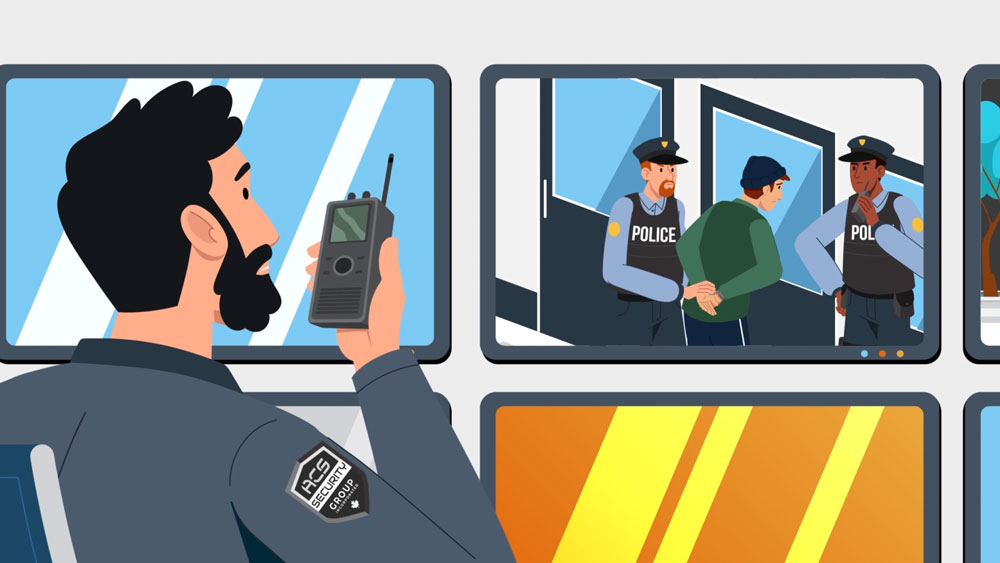
Your complete resource for explainer video examples, guides, and templates. Find the best tools and strategies on how to make explainer videos that drive results.

An explainer video is a short animated or live action video that uses simple language and clear visuals to answer a viewer’s key questions about what something is, how it works, and why it matters.
They can be anywhere from 60-120 seconds or longer, depending on the use case.

Most explainer videos are used in marketing, education, or product onboarding to clarify complex topics, demonstrate how something works, or show how a solution fixes a problem.
They often serve as a first point of contact, giving viewers a concise, high-level overview rather than in-depth technical detail.
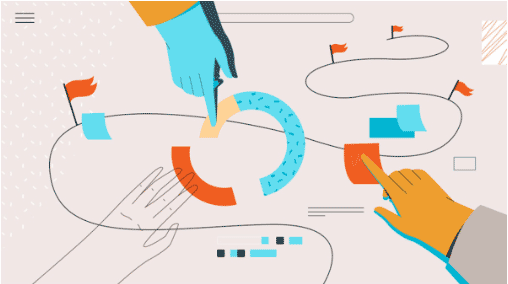
Explainer videos are usually short in length, visually engaging and structured around a simple story or problem–solution arc.
They typically combine visuals, on-screen text, and narration to keep attention, improve comprehension, and encourage a specific call to action.
Shows what a product does, its key features, and how it works in practice, often using simplified versions of the UI, screen capture or live/action-plus-animation.
Explains how a service or offer solves a specific problem for a target audience, focusing on benefits and outcomes more than interface details.
Built to drive sign‑ups or purchases, usually with a problem–solution–proof–call‑to‑action structure that addresses objections and highlights value.
Shows what a product does, its key features, and how it works in practice, often using screen capture or live/action-plus-animation.
Explains how a service or offer solves a specific problem for a target audience, focusing on benefits and outcomes more than interface details.
Built to drive sign‑ups or purchases, usually with a problem–solution–proof–call‑to‑action structure that addresses objections and highlights value.
Tells the story of who the company is, what it stands for, and why it exists, aiming to build trust and emotional connection rather than drive an immediate sale.
Gives a high‑level view of the organization, its offerings, and key value propositions for investors, partners, or enterprise buyers.
Designed to introduce a new initiative, feature, or social/public‑interest topic, focusing on clarity and emotional impact.
Focused on digital products, showing the main screens and flows so prospects understand how the software fits into their day‑to‑day.
Highlights one specific feature or new release, explaining what changed, why it matters, and how to use it.
Combines story and proof, showing how a real customer used the product or service to achieve measurable results.
A 2D animated explainer video uses flat, two‑dimensional characters, icons, and scenes to explain a product, service, or idea in a clear, story‑driven way.
Typical use cases: startup product launches, overview videos for SaaS or services, landing page explainers, and social ads where you need a friendly, flexible visual style.
A motion graphics explainer video uses animated shapes, icons, typography, and UI elements instead of characters to communicate abstract or data‑heavy ideas.
Typical use cases: B2B and tech explainers, financial or data stories, feature overviews, and brand videos where clarity and polish matter more than character storytelling.
A whiteboard explainer video shows graphics and text being “drawn” on a white background while a voiceover walks through the message step by step.
Typical use cases: educational and training content, process explanations, nonprofit or cause‑based messaging, and any topic that benefits from a classroom‑style, stepwise explanation.
A live action explainer video uses real people, locations, and physical products to explain what a brand does and why it matters.
Typical use cases: brand stories, service business explainers, testimonials, culture videos, and product demos where human connection and real‑world context are important.
2.5D animation allows two-dimensional graphics to get a three-dimensional look without fully stepping into the realm of 3D animation.
Typical use cases: Often referred to as “pseudo-3D”, it utilizes layers and camera movements to create a sense of depth within a flat image. Used in tech explainer videos that need to show depth.
A 3D product explainer video uses three‑dimensional models and camera moves to reveal a product’s form, components, and functionality in high visual detail.
Typical use cases: hardware and devices, manufacturing and engineering products, medical or industrial equipment, and any product where internal mechanisms or premium look and feel need to be showcased.
SaaS and tech explainer videos clarify how a product works and why it matters, turning features into outcomes for buyers. They commonly use UI animations, workflow sequences, and simple metaphors to show setup, key actions, and results.
Used for launches, demos, trials, and onboarding, they reduce confusion and accelerate adoption.
Healthcare explainer videos simplify services and patient journeys while maintaining accuracy, clarity, and an empathetic tone. They use plain-language narration, careful terminology, and clean visuals to explain conditions, procedures, and next steps. Used for patient education, clinic services, and internal training, they build trust and reduce anxiety.
Nonprofit explainer videos connect people to a mission by explaining an issue clearly and showing how support creates impact.
They use human-centered storytelling, simple statistics, and cause-and-effect visuals to move from problem to solution. Used for campaigns, fundraising, and awareness, they drive donations, volunteers, and shares.
Manufacturing and mining explainer videos communicate processes and safety requirements with clarity, realism, and operational credibility.
They use diagrams, simplified equipment visuals, and step sequences to explain procedures, compliance, and site workflows. Used for onboarding, safety training, to improve consistency and reduce incidents.
Education explainer videos present concepts, programs, or policies in a structured learning flow that improves comprehension and recall.
They use step-by-step visuals, labels, and examples to match the audience’s grade level and context. Used for lessons, student onboarding, and announcements, they support consistent instruction and fewer repeat questions.
Finance explainer videos make complex products and processes easier to understand, emphasizing transparency, credibility, and risk awareness.
They use structured explanations, on-screen definitions, and scenario visuals to clarify fees, timelines, and decisions. Used for investing, lending, insurance, and fintech, they increase confidence and reduce drop-off.
Here are some examples of the most common explainer videos companies make.
Planning an explainer video is the process of defining what the video needs to accomplish, who it is for, and what information it must communicate to be effective.
It typically covers the core message and structure, the type and style of video, the expected length, and the practical requirements for production such as brand guidelines, approvals, and delivery needs. Here are six steps to of a typical explainer video production process.
An explainer video is a short, engaging video that clearly illustrates how a product, service, or concept works
These videos use simple language and visuals to break down complex ideas, helping viewers quickly understand your business or message. Companies often use explainer videos as a storytelling tool to introduce their brand or solution in a concise, memorable way.
Higher Conversion Rates: Placing an explainer video on a landing page can boost conversion rates by up to 80%, turning more visitors into leads or customers.
Better Information Retention: Viewers retain about 95% of a message when watched in a video, compared to only 10% when reading text. This means your audience is far more likely to remember your value proposition.
Simplify Complex Concepts: Animated explainer videos make it easier to explain technical or abstract ideas in an accessible way, helping viewers understand your solution and make informed decisions.
Increased Engagement and SEO: Video content is highly engaging and keeps people on your site longer. This not only educates and entertains your audience but can also improve your website’s SEO by increasing dwell time
For most marketing purposes, shorter is better – around 60 to 90 seconds is ideal for an explainer video.
This length is usually enough to convey your key message while keeping viewers’ attention.
It’s recommended to stay under 2 minutes in runtime. Only very complex topics or special use cases (such as detailed training modules or demos) would warrant videos longer than about 2–3 minutes, as longer videos risk losing viewer interest.
Producing a custom animated explainer video typically takes about 4–6 weeks for a 60–90 second video. This timeline covers the entire explainer video production process – from initial concept and scripting through to animation and final edits.
Simpler videos can sometimes be completed in around 3–4 weeks (especially if a script is ready and feedback is prompt). More complex animations or longer videos might require 6–8+ weeks of production and revision time.
If you have a tight deadline, many explainer video companies offer rush services, though faster turnarounds may incur higher costs to allocate extra resources.
The cost of an explainer video can vary widely depending on length, style, and complexity. To get more insight into video production costs, see our article on explainer video costs.
Animated explainer video production is a multi-stage process that ensures the final video is effective and high-quality. While the exact workflow can vary by provider, a typical production process involves:
Discovery & Scriptwriting: Understanding your business, target audience, and goals. The team develops a compelling script that delivers your message clearly.
Storyboard: Creating a scene-by-scene blueprint of the video using sketches or frames. This outlines the visuals and how they align with the script.
Design & Illustration: Designing the characters, graphics, and style of the video based on your brand guidelines. All artwork for each scene is prepared.
Voiceover Recording: Hiring a professional voice actor to narrate the script (if the video uses voiceover). You can usually choose a voice that fits your brand.
Animation: Bringing the illustrations to life with motion. Animators produce the video by sequencing movements, transitions, and effects to match the voiceover and script.
Sound Design: Adding background music and sound effects to enhance the video. This audio design adds emotion and polish, making the video more engaging.
Feedback & Delivery: You review the animated video and request any revisions. After final edits, the completed explainer video is delivered in your required format.
Throughout this process, a good explainer video service will collaborate closely with you, allowing for feedback and revisions at each stage. This ensures the final product aligns with your vision and effectively communicates your message.
Nearly any industry or organization can benefit from using explainer videos. These videos are popular in sectors like SaaS and technology, where complex products need simplification, as well as healthcare, nonprofits, finance, education, business training, manufacturing, and more.
You may be a startup explaining a cutting-edge tech solution or a nonprofit raising awareness for a cause, an explainer video can distill your message into an easily digestible, compelling story.
The key is that the video is tailored to your target audience – a quality explainer video company will have experience adapting their style to different industries and use cases.
Choosing an explainer video production company is an important decision. Here are a few tips to find the right partner:
Experience and Track Record: Look for a company with a proven history of producing explainer videos. An experienced team (with years in business and a robust portfolio) is more likely to deliver a polished video.
For example, our team at Creamy Animation has 15+ years of experience and has produced thousands of videos for clients worldwide. Such depth of experience means we’ve encountered a wide range of industries and project goals.
Quality of Work: Review their portfolio and case studies. Do the animation style, storytelling quality, and overall production value meet your standards?
Top explainer video companies will showcase a variety of styles (2D animation, motion graphics, whiteboard, etc.) and professional, custom-designed visuals – not generic templates.
Client Testimonials: Check reviews or testimonials. Positive feedback from past clients is a good indicator of reliability and the ability to meet expectations (in terms of both process and results).
Production Services: Ensure the company offers end-to-end explainer video services, including strategy, scriptwriting, voiceover, animation, and editing. A full-service team can guide you through the entire production smoothly.
Communication and Collaboration: A trustworthy company will be transparent and communicative. They should involve you in key milestones (script approval, storyboard review, etc.) and be open to revisions. Look for a team that listens to your ideas and understands your brand message.
By considering these factors, you can find an explainer video company that not only delivers a high-quality video but also provides a professional, stress-free production experience. Building trust is crucial – you want to work with people who are genuinely invested in the success of your project.
Getting started with an explainer video is simple. First, reach out to our team with details about your project goals, audience, and budget. We’ll schedule a short discovery call to understand your needs and recommend the best approach.
From there you’ll get a proposal with scope, pricing, and timeline so you know exactly what to expect. Once approved, the explainer video production process kicks off — from scriptwriting through design and animation — with opportunities for feedback at each stage. This ensures you’re involved throughout and confident in the final video.