A 3D explainer video builds its world in three dimensions, so products, machines and abstract ideas can be shown from any angle. These 12 3D explainer video examples come from real companies in software, hardware, logistics and consumer brands.
| What are the best 3D explainer video examples? Strong 3D explainer video examples include Contruent for capital project software, Acrisure for an insurance platform, OLEDworks Aerospace for aircraft lighting, Microsoft Planner for work management, Webflow for a no-code conference, Nexmo for an API platform, Adobe Analytics for marketing software, Google for password security, Lenovo for meeting room devices, Beumer for warehouse logistics, CryptoCubes for an artist platform and Airbnb for a 15-second hosting spot. |
A 3D explainer video is a short animated video built with three-dimensional models, lighting and camera movement. It explains a product, service or idea, usually in 30 seconds to 2 minutes. 3D is strongest when a physical product, a hidden mechanism or a large environment needs to be shown.
Many 3D explainers mix techniques. Some combine 3D product shots with 2D graphics or characters.
This article looks at 12 3D explainer videos from software, hardware, logistics and consumer brands. For each one, I describe what the video shows and why 3D suits it. After the examples, I cover what a 3D explainer video costs and how to plan one.
Here is a quick overview of the 12 videos in this article. The table links to each example below.
Every entry had to pass four checks. 3D animation plays a central role in the video. The message is clear: it states what the company does, who it is for and why it matters, without burying that under a feature list. The video is still live and embeddable today. And together the list covers different uses of 3D, from product visualization to mixed media and stop motion.
No company here has published performance data for its video, so each entry says so rather than guessing. Every entry was last verified in September 2026.
The first two examples come from the Creamy Animation video library. The other videos were published by the brands or by the studios that made them.
| # | Company | Use |
|---|---|---|
| 1 | Contruent | 3D explainer for capital project software |
| 2 | Acrisure | 3D motion design for a fintech insurance platform |
| 3 | OLEDworks Aerospace | Realistic 3D product explainer |
| 4 | Microsoft Planner | 3D product film for work management software |
| 5 | Webflow | 3D visual poetry for a software conference |
| 6 | Nexmo | Mixed-media 3D explainer for an API |
| 7 | Adobe Analytics | Short 3D explainer from a series |
| 8 | Myth-busting 3D explainer | |
| 9 | Lenovo | 3D explainer for workplace technology |
| 10 | Beumer | Mixed 3D and 2D logistics explainer |
| 11 | CryptoCubes | Minimal 3D infographic explainer |
| 12 | Airbnb | 15-second 3D stop-motion explainer |
Runtime: 1:38
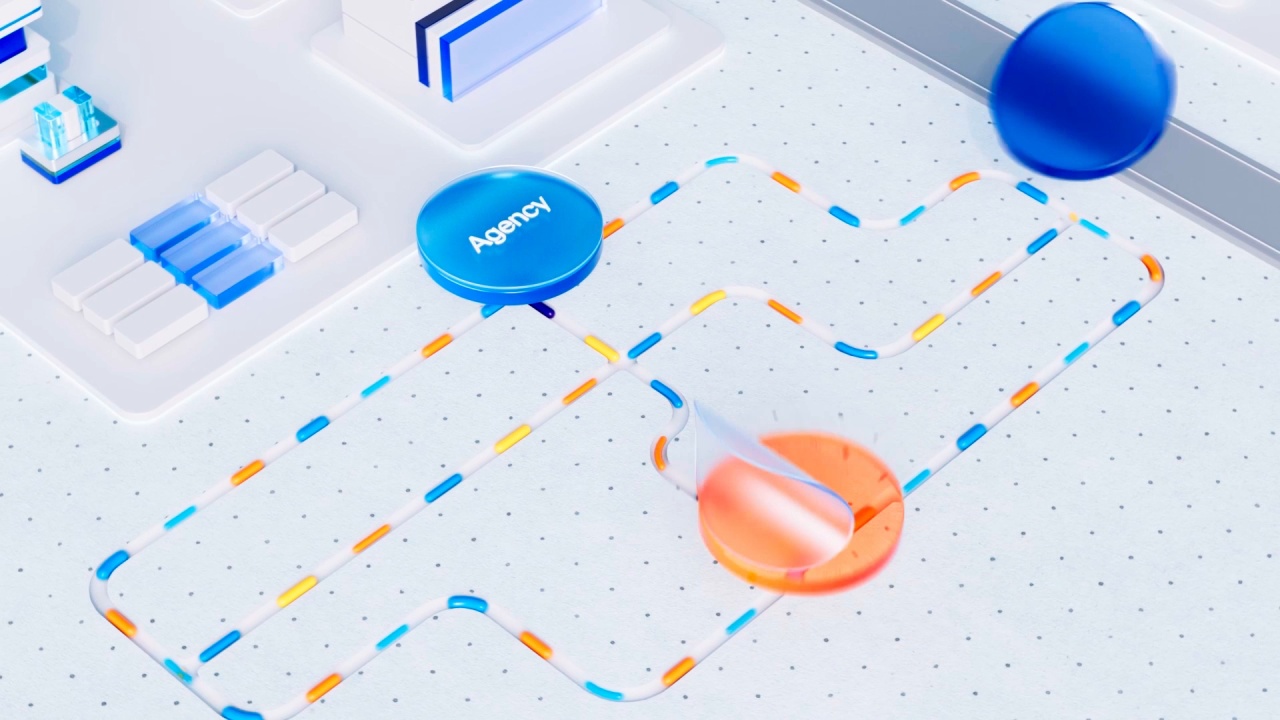
Contruent’s lifecycle cost management software helps oil and gas construction projects stay on time and on budget. The video uses 3D to show near-realistic project scenarios that would be hard to capture with a camera.
Performance data: none published.
Why it works:
Takeaway:
Use 3D when the real setting is too big, remote or expensive to film.
The Contruent video is drawn from the video library of Creamy Animation.
Runtime: 1:08
Acrisure is a fintech-enabled insurance platform. The explainer uses 3D motion design to turn insurance concepts, like digital-first policy buying and partner networks, into clean visuals.
Performance data: none published.
Why it works:
Takeaway:
3D can make an intangible service feel solid.
Runtime: 1:53
OLEDworks develops OLED lighting for the automotive and aerospace industries. The video uses realistic 3D to show how its lighting works in an aircraft setting.
Performance data: none published.
Why it works:
Takeaway:
For physical products in hard-to-reach places, realistic 3D is the practical option.
Runtime: 1:07
This UX film introduces the new Microsoft Planner. It combines 3D with screencast and motion graphic animation.
Performance data: none published.
Why it works:
Takeaway:
Placing UI in 3D space can make software feel new.
Runtime: 1:30
This piece promoted Webflow’s conference about the future of software development. It is described as visual poetry built around the idea of a no-code era.
Performance data: none published.
Why it works:
Takeaway:
3D can sell a big idea as well as a product.
Runtime: 1:46
Nexmo is the Vonage API platform for communication tools that connect people. This mixed-media animation focuses on the human side of communication, because an API is already technical and impersonal.
Performance data: none published.
Why it works:
Takeaway:
The more technical the product, the more human the story should be.
Runtime: 0:37
This is the first of a series of videos for Adobe Experience Cloud, Adobe’s collection of marketing and web analytics products. It focuses on Adobe Analytics.
Performance data: none published.
Why it works:
Takeaway:
A product suite is easier to explain one product at a time.
Runtime: 1:58
This animation highlights common misconceptions about passwords. Most people think their passwords are stronger than they are, because they reuse common themes and patterns.
Performance data: none published.
Why it works:
Takeaway:
Correcting a common belief is a strong hook for an explainer.
Runtime: 2:06
Lenovo ThinkSmart Manager gives IT teams visibility into how all of their Lenovo meeting room devices are working, in one place. The video opens on a familiar pain: an IT issue that derails a meeting.
Performance data: none published.
Why it works:
Takeaway:
Open with the moment the problem hurts most.
Runtime: 1:56
Beumer’s BG Pouch System is a logistics solution for warehouses. The video mixes 3D, 2D and characters to show how it turns warehouse chaos into order.
Performance data: none published.
Why it works:
Takeaway:
You do not need all-3D. Use it where depth matters most.
Runtime: 1:57
CryptoCubes connects artists with CryptoCubes creators. The animation captures the project in its founder’s signature minimal style.
Performance data: none published.
Why it works:
Takeaway:
Let your existing visual identity guide the 3D style.
Runtime: 0:15
If your kids have moved out, you may have a spare room you can list on Airbnb. This spot makes that point in 15 seconds using 3D stop-motion animation.
Performance data: none published.
Why it works:
Takeaway:
A very short explainer works when it is tied to one life moment.
Price depends on runtime, visual treatment and production scope. Most projects fall into one of three tiers.
| Tier | Typical range | Best for |
|---|---|---|
| AI-Assisted | $2,500 to $4,000 | 2D explainers with limited 3D elements |
| Standard | $3,000 to $10,000 | A mostly 2D video with key 3D moments, such as a product shot |
| Premium | $10,000 to $25,000 | Full 3D modeling, lighting and animation |
Full 3D projects usually take longer than 2D because modeling, lighting and rendering add production stages. For a full breakdown by style and length, see the explainer video cost guide.
Use 3D when the viewer needs to see a physical product, a hidden mechanism or a large environment. OLEDworks shows its lighting inside an aircraft. Beumer shows warehouse machinery at work.
Full 3D is not always needed. Beumer mixes 3D, 2D and characters. Microsoft Planner combines 3D with screencast and motion graphics.
Lenovo opens on an IT issue that derails a meeting. The product appears only after the viewer recognizes the problem.
Sign off on the style frames and 3D models before animation starts. Modeling, lighting and rendering add time, so late changes cost more.
Airbnb makes its point in 15 seconds. Lenovo runs just over two minutes. Decide where the video will run first, then set the runtime.
It can be. Microsoft Planner and Adobe Analytics use 3D to give interface moments depth. For most software explainers, 2D is faster and costs less.
The 3D explainer videos on this list use depth for a reason. They show a product from every angle, open up a machine, or build a world a camera could not reach. The weaker use of 3D is decoration, and none of these fall into that.
If the thing you need to explain is physical, hidden or huge, 3D is worth the extra budget.
Larry is the founder and Chief Storyteller at Creamy Animation, founded in 2009. He leads a team that creates story-driven videos for businesses and nonprofits. 15+ years in video strategy and production, specializing in SaaS, B2B, and nonprofit storytelling. A marketer, designer, and animator, Larry has overseen the production of more than 1,500 videos for Fujitsu, Logitech, Warner Brothers, NFL, Blockdaemon, Astronomer, Canonical, and 370+ others.
For Larry, God is first, and everything else is a blessing that comes from serving Him. When he’s not working, he’s hanging out with his wife and three kids, playing the piano, or pursuing his filmmaking side hustle.